ElysiaJS — The Bun-Powered Backend Framework That's Changing the Game
Discover ElysiaJS, an ergonomic web framework built for Bun runtime that combines Express-like simplicity with exceptional performance and end-to-end type safety.
 Elyor Djalalov
If you’re building APIs in JavaScript/TypeScript and haven’t looked at ElysiaJS yet, you’re missing out on something special.
What is ElysiaJS?
Elysia is an ergonomic web framework built specifically for the Bun runtime. It combines Express-like simplicity with exceptional performance and end-to-end type safety. The tagline says it all: “Ergonomic Framework for Humans”.
Why It Caught My Attention
Blazing Fast Performance
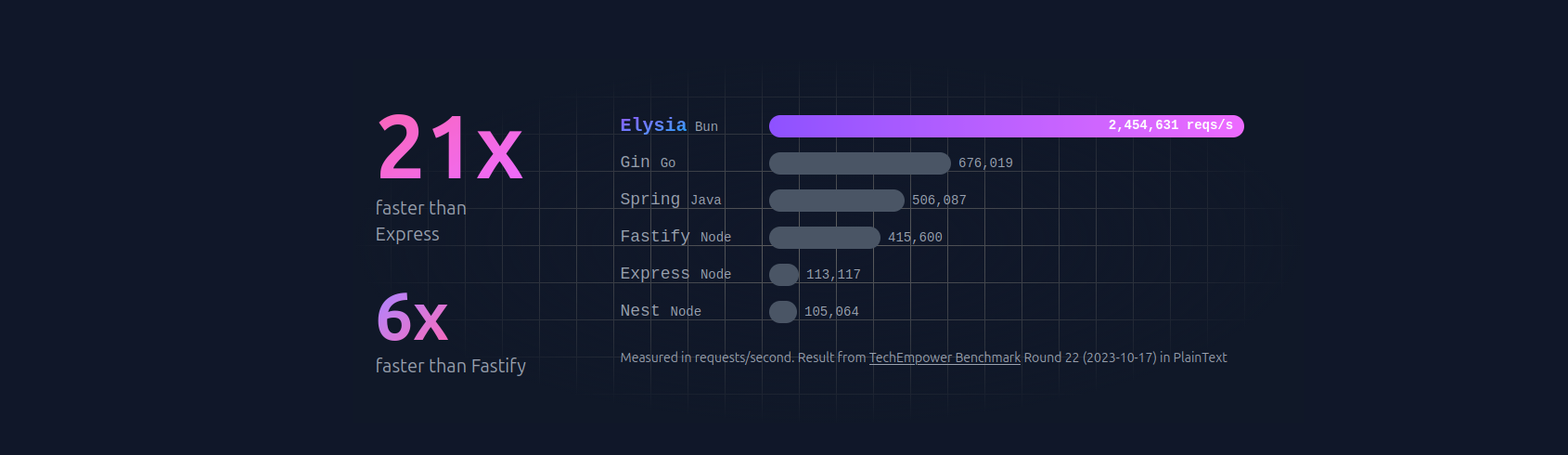
The numbers speak for themselves:
- 21x faster than Express
- 6x faster than Fastify
- 2,454,631 requests/second in TechEmpower benchmarks
To put this in perspective, Elysia running on Bun rivals performance numbers typically seen only in Go and Rust frameworks. For a JavaScript/TypeScript framework, this is remarkable.
Framework Performance Comparison (requests/second):
━━━━━━━━━━━━━━━━━━━━━━━━━━━━━━━━━━━━━━━━━━━━━━━━━━
Elysia (Bun)    ████████████████████████  2,454,631
Gin (Go)        ████████                    676,019
Spring (Java)   ██████                      506,087
Fastify (Node)  █████                       415,600
Express (Node)  █                           113,117
Nest (Node)     █                           105,064
End-to-End Type Safety
Like tRPC, but without the complexity. Types flow seamlessly from backend to frontend with zero code generation.
import { Elysia, t } from 'elysia'

const app = new Elysia()
  .post('/user', ({ body }) => {
    // body is fully typed as { name: string, email: string }
    return {
      id: crypto.randomUUID(),
      ...body,
      createdAt: new Date()
    }
  }, {
    body: t.Object({
      name: t.String(),
      email: t.String({ format: 'email' })
    })
  })
The schema defines validation AND types in one place. No duplication, no drift between runtime validation and TypeScript types.
OpenAPI Documentation in One Line
Just add .use(openapi()) and you have full API documentation. No annotations needed, no separate spec files to maintain:
import { Elysia } from 'elysia'
import { openapi } from '@elysiajs/openapi'

const app = new Elysia()
  .use(openapi())  // That's it! Visit /swagger
  .get('/health', () => 'OK')
  .listen(3000)
Bring Your Own Validator
Works with your favorite validation library:
- Zod — The most popular choice
- Valibot — Lightweight alternative
- ArkType — Fast and type-safe
- Effect — For functional programming enthusiasts
Any Standard Schema compliant library works seamlessly while maintaining full type inference and OpenAPI compatibility.
Eden Treaty: Type-Safe Client
One of Elysia’s killer features is Eden Treaty — a type-safe client that syncs with your server automatically:
// server.ts
import { Elysia, t } from 'elysia'

export const app = new Elysia()
  .get('/posts', () => posts)
  .post('/posts', ({ body }) => createPost(body), {
    body: t.Object({
      title: t.String(),
      content: t.String()
    })
  })

export type App = typeof app
// client.ts
import { treaty } from '@elysiajs/eden'
import type { App } from './server'
const api = treaty<App>('localhost:3000')
// Fully typed! IDE autocomplete works perfectly
const { data, error } = await api.posts.post({
title: 'Hello World',
content: 'My first post'
})No code generation. No build step. Just import the type and go.
Real-World Example: REST API
Here’s a more complete example showing Elysia’s ergonomic design:
import { Elysia, t } from 'elysia'
import { openapi } from '@elysiajs/openapi'
import { cors } from '@elysiajs/cors'

const app = new Elysia()
  .use(openapi())
  .use(cors())

  // Group related routes
  .group('/api/users', app => app
    .get('/', async () => {
      const users = await db.user.findMany()
      return users
    })

    .get('/:id', async ({ params: { id } }) => {
      const user = await db.user.findUnique({ where: { id } })
      if (!user) throw new Error('User not found')
      return user
    }, {
      params: t.Object({
        id: t.String()
      })
    })

    .post('/', async ({ body }) => {
      return db.user.create({ data: body })
    }, {
      body: t.Object({
        name: t.String({ minLength: 2 }),
        email: t.String({ format: 'email' })
      })
    })
  )

  .listen(3000)

console.log(`🦊 Elysia running at http://localhost:3000`)
Built-in Features That Matter
- File uploads with native validation
- WebSocket support via µWebSocket (the fastest WS library)
- Stream responses using generator functions
- Static file serving out of the box
Runtime Flexibility
While Elysia is optimized for Bun, it’s built on Web Standards and runs on:
- Bun (recommended for best performance)
- Node.js
- Deno
- Vercel Edge Functions
No vendor lock-in, despite Bun’s performance advantages.
Getting Started
# Create a new project
bun create elysia app

# Or add to existing project
bun add elysia
Should You Use It?
Yes, if you:
- Want maximum performance from TypeScript
- Value end-to-end type safety
- Are already using or considering Bun
- Build APIs and want automatic OpenAPI docs
- Prefer ergonomic, minimal boilerplate code
Maybe wait if you:
- Need a battle-tested ecosystem (Elysia is newer)
- Are heavily invested in Express middleware
- Require enterprise support
Conclusion
ElysiaJS represents a new wave of backend frameworks that refuse to compromise. You get the developer experience of Express, the type safety of tRPC, the performance of Go, and the documentation of OpenAPI — all in one package.
The project is community-driven, well-documented, and actively maintained. If you’re exploring modern backend alternatives or experimenting with Bun, Elysia deserves a serious look.
Links:
What’s your experience with Bun-based frameworks? Have you tried Elysia in production? Let’s connect!
Elyor Djalalov
Katta dastur muhandisi. Veb-dasturlash, dasturiy ta'minot arxitekturasi va muhandislik haqida yozaman.
Barcha maqolalar →